Table of Contents
=
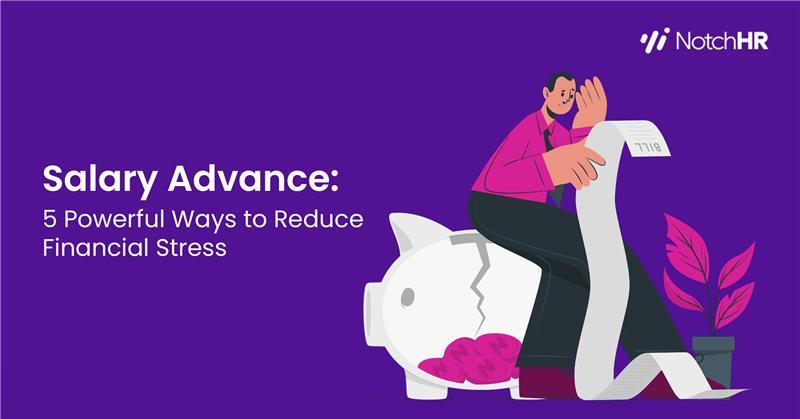
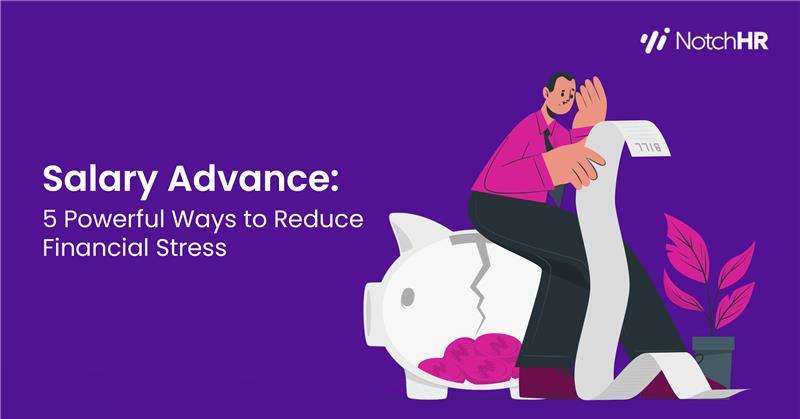
It was the 15th of the month. Chidi, a customer success associate, had a family emergency; his mother needed urgent surgery. His next salary was two weeks away. He walked quietly into his HR manager’s office and asked if there was any way to access part of his pay early or get a salary advance.
The HR manager, caught off guard, said she would check. She sent two emails that went unanswered, called the finance team, and eventually told Chidi there was no formal process for that. He turned to a loan app instead and paid back nearly 40% more than he borrowed.
This story is not unusual. Across Nigerian offices, employees facing financial emergencies hit a wall because their employer has no salary advance policy. The consequences are predictable: predatory borrowing, financial stress, distracted work, and eventually, attrition.
A well-structured salary advance for employees is one of the simplest, most effective benefits a Nigerian company can offer. It costs the business nothing beyond a brief cash flow timing shift, yet its impact on employee financial wellness and loyalty is significant. Here are five ways it works and how to implement it properly.
What Is a Salary Advance for Employees?
A salary advance is access to a portion of wages the employee has already earned, provided before the standard payday. It is not a loan. Interest does not accrue. The amount is simply deducted from the employee’s next salary payment.
This is different from an employer loan, which involves a separate repayment schedule and may or may not carry interest. A salary advance is cleaner, simpler, and carries no debt implications for the employee.
Salary Advance, a system where employees can draw down on accrued wages in real time through a platform or app. This is growing in Nigeria as HR technology platforms begin to offer it as a payroll feature. However, even without a digital platform, a simple written policy achieves most of the benefits.
For a broader context on how financial benefits fit into your total package, see: Employee Benefits in Nigeria: The Complete Guide for HR Teams.
The 5 Ways Salary Advance Reduces Financial Stress
1. It Breaks the Predatory Lending Cycle
Nigeria’s digital loan app market exploded over the past five years. Many of these apps charge annualised interest rates that effectively double the cost of borrowing within weeks. The Central Bank of Nigeria has taken action against several operators, but the ecosystem remains active and financially dangerous for borrowers.
When there is access to a salary advance for employees, they do not need the loan app. They access money they have already earned, at zero cost. That single shift removes a source of financial stress that compounds over months for many workers.
2. It Stabilises Employee Focus and Productivity
Financial stress is not left at the door when employees arrive at work. Research from the American Psychological Association consistently shows that financial worry is one of the leading drivers of workplace distraction, absenteeism, and reduced output. Nigerian professionals are not immune to this pattern, particularly given the pressure of urban living costs.
An employee who knows they can access support in an emergency is psychologically safer. That psychological safety translates into more present, more focused work.
3. It Signals That the Company Sees Employees as People
Benefits communicate values. When a company has a salary advance policy, it signals something real: we understand that life does not align with pay cycles, and we have thought about what to do when it does not. That signal builds loyalty in a way that a performance scorecard simply cannot.
Low-cost benefits with high emotional resonance are the smartest investments an HR team can make. A salary advance policy sits squarely in that category.
4. It Reduces Attrition Driven by Financial Desperation
Some employees leave jobs not because they dislike the work or the company but because they cannot afford to stay. A cash flow crisis, with no relief mechanism at work, pushes people to look for weekly-pay gig work or roles with more frequent payment cycles.
A salary advance for employees closes that gap. The employee does not need to leave to solve a temporary problem. Retention cost saved on a single mid-level employee typically exceeds what a company would advance in a year.
5. It Keeps HR in Full Control of Cash Flow and Compliance
Without a formal system, salary advance requests become administrative chaos. HR receives informal requests via WhatsApp, verbal approvals are given or denied inconsistently, deductions are sometimes missed, and there is no audit trail. This creates payroll errors, employee grievances, and potential compliance risks.
NotchHR eliminates all of that. The platform manages the entire workflow from request, approval, disbursement, and automatic deduction, all within the same system that runs payroll. Every advance is documented. Every repayment is tracked. HR teams can see outstanding advances at a glance and generate reports for audits or board review.
The 8% monthly interest rate is applied transparently and consistently, removing the possibility of ad hoc negotiations or perceived favouritism. Every eligible employee gets the same fair terms because the system is the policy.
NotchHR vs. Loan Sharks: The Numbers Tell the Story
To understand the real value of NotchHR’s salary advance for employees feature, the comparison below shows what an employee faces when they use NotchHR versus when they fall into the hands of a loan shark or predatory lending app.
| Factor | NotchHR Salary Advance For Employees | Loan Shark / Predatory App |
| Interest rate | 8% monthly: transparent and fixed | 20–50%+ monthly, which is often hidden in fine print |
| Repayment method | Automatic payroll deduction | Manual transfers; penalties for late payment |
| Harassment risk | None: professional, within the employer-employee relationship | High: aggressive recovery, contact of references, public shaming |
| Data privacy | Protected within HR platform; no external sharing | Many apps access contacts and send embarrassing messages if payment is late |
| Transparency | Full: both employer and employee see all terms | Often opaque: fees, penalties, and rollovers buried in terms |
| Compounding debt risk | None: capped advance, one repayment | Very high: rollovers and penalties create spiralling debt |
| Employer visibility | Full audit trail within NotchHR dashboard | Zero: employer has no visibility into the employee’s debt situation |
| Cost on ₦50,000 advance | ₦4,000 interest = ₦54,000 total repaid | ₦15,000–₦25,000+ interest = ₦65,000–₦75,000+ total repaid |
The numbers speak for themselves. An employee who borrows ₦50,000 through NotchHR pays ₦4,000 in interest. The same employee borrowing from a typical loan shark or predatory lending app could pay ₦15,000 to ₦25,000 or more in the same period. NotchHR is not just more convenient; it is dramatically more affordable and infinitely safer for the people you employ.
If your company does not have a formal salary advance process, now is a good time to build one. Talk to a consultant who can show you how to integrate it into your payroll workflow. → Speak to a consultant to book a demo →
5. Pitfalls to Avoid
Like any HR programme, salary advance for employees works best when managed thoughtfully. Watch out for employees who repeatedly max out their advances; this may indicate deeper financial distress, and a referral to financial counselling or an Employee Assistance Programme (EAP) may be more helpful than another advance.
Avoid lack of documentation, without a system like NotchHR, informal advances lead to payroll errors and disputes. Always use the platform and always document.
Never operate without an advance cap; an uncapped programme creates cash flow risk for the company and debt risk for the employee.
Set the limits, communicate them, and enforce them consistently.
And finally, do not assume employees know the benefit exists; proactive internal communication is essential. If not stated that salary advance for employees is available, they will still turn to loan sharks. That outcome is entirely avoidable.
6. Conclusion
Salary advance for employees is one of the highest-impact, lowest-cost benefits that a Nigerian SMB can offer. It does not require a large budget. It does not require a complex legal structure. What it requires is a thoughtful policy, a reliable payroll platform, and a genuine commitment to employee financial well-being.
When your employees have access to NotchHR’s salary advance for employees at a fair, transparent 8% monthly rate, they are protected from predatory lenders, they are less financially stressed, and they are more focused, loyal, and productive at work. That is not charity. That is smart HR.
And when you compare 8% to the 20%, 30%, or 50%-plus monthly rates that loan sharks and predatory apps charge, the choice is not even close. Offering a salary advance through NotchHR is one of the most meaningful things you can do for the people who show up and do the work every single day.
NotchHR makes it easy to manage salary advance for employees directly within your payroll workflow with full audit trails, automatic deductions, and a fair 8% monthly rate that protects your people from predatory lenders.
Book a free demo of NotchHR today and give your employees a better option.
7. Frequently Asked Questions (FAQ)
Q: Who is eligible for a salary advance on NotchHR? All employees of companies that run their payroll on the NotchHR platform are eligible for a salary advance. There is no separate application to a bank or third-party lender; eligibility is built into the platform automatically.
Q: What is the interest rate on a NotchHR salary advance ? NotchHR charges a monthly interest rate of 8%. This is significantly lower than most loan apps in Nigeria and far cheaper than borrowing from informal money lenders, many of whom charge 20% to 50% or more per month.
Q: How much can an employee request as a salary advance? Advances are typically capped at 50% of the employee’s monthly net salary. This ensures that when the repayment is deducted, the employee still takes home a meaningful portion of their pay and is not left in a worse financial position than before.
Q: How is the salary advance for employees
repaid? Repayment is handled automatically through payroll deduction. The agreed amount, including the 8% interest, is deducted directly from the employee’s next salary. There are no manual transfers, no reminders, and no risk of missed payments.
Q: Is a salary advance the same as a loan? No. A salary advance is not a loan it is the employee accessing a portion of wages they have already earned or are in the process of earning. Unlike a bank loan or lending app, there is no external lender involved, no credit check, and no risk of the kind of aggressive debt recovery tactics associated with loan sharks or predatory apps. It is the employee’s own money, made available early through NotchHR.