3 Key Strategies for Employee Retention For Growth
Table of Contents
Introduction
Implementing the key strategies for employee retention can be the single most important decision a Nigerian business leader makes this year.
Femi, the founder of a Real Estate firm in Abuja, learned this the hard way. Between January and May, 2023, nine people left his fifty-four-person property firm. His senior sales agents, best valuer, and the operations manager who had been with him since year three all walked out within five months. Two estate sales stalled. A client escalation spiralled. Femi stared at a half-finished org chart one evening and asked: “Why can’t I keep good people?”
This article explores three proven strategies for employee retention: building culture and employee experience, investing in learning and growth, and using data and technology. Each one, applied consistently, separates companies that scale from those that stall. Femi applied all three, and that is what we’ll be learning today
The Hidden Cost of Losing Good People
When Femi sat down with an HR consultant to count the real cost of those nine exits, the number floored him.
“Replacing an employee can cost between 50% and 200% of their annual salary.”
SHRM
For his operations manager earning 6.5 million naira annually, the replacement cost alone ran close to 9 million naira before the new hire was productive. Multiply that across nine exits and the damage becomes existential for a mid-sized firm still reinvesting in growth.
Beyond the financial hit, the turnover of employee talent at Femi’s company triggered something harder to measure. The remaining staff quietly updated their CVs. Top performers always have options, and visible instability speeds up their decision to explore them. That is how the staff turnover definition has expanded in Nigerian companies. It no longer just means people quitting. It now includes silent disengagement: employees who stay physically but check out mentally.
What One Exit Really Costs You
Cost Category
Estimated Impact
Recruitment and Advertising
200,000 to 800,000 naira
Interview and HR Time
150,000 to 400,000 naira
Onboarding and Training
300,000 to 1,000,000 naira
Lost Productivity (3 to 6 months)
25% to 50% of annual salary
Knowledge and Relationship Loss
Unquantifiable but significant
Every departure carries a hidden price tag. The case for proactive strategies for employee retention becomes undeniable when these costs are added up.
For Femi, understanding the true cost of attrition was the moment employee turnover reduction became a funded strategic priority, not just an HR conversation.
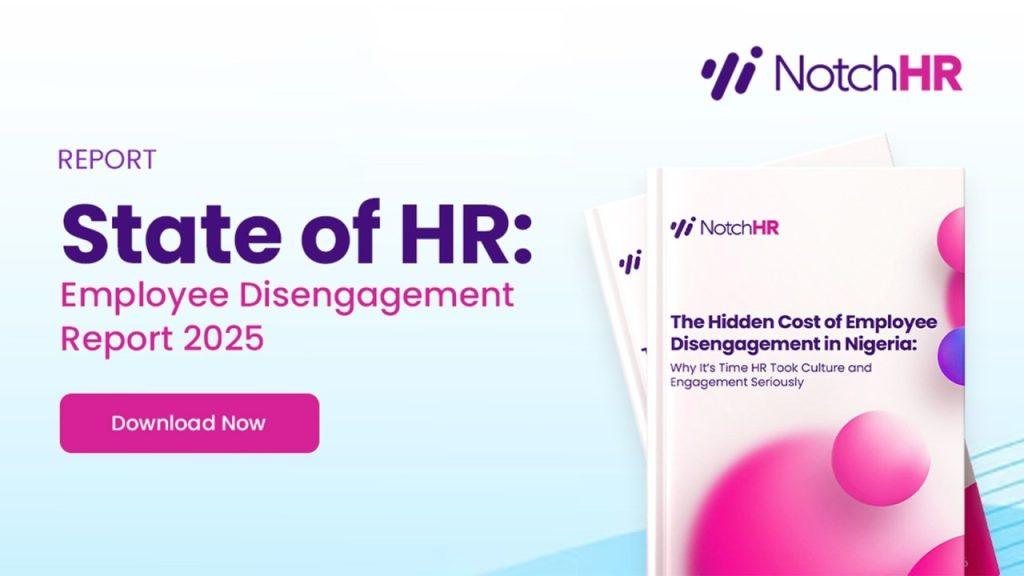
To see the full scale of how disengagement is impacting Nigerian companies and the practical steps leaders can take to reverse it, explore the complete research report below.
Download this exclusive report to uncover the real financial impact of disengaged teams and the culture shifts that protect growth.
What Are The Key Strategies for Employee Retention For Growth?
Strategy 1: Build a Culture People Do Not Want to Leave
Culture Is the Core of Any Employee Retention Strategy
When Femi asked the staff who stayed why their colleagues had really left, nobody mentioned salary. They talked about feeling invisible. About decisions made above them without explanation. About managers who tracked deal numbers but never asked how someone was doing. About a workplace that celebrated closings loudly and went silent when someone had a difficult quarter.
Femi had built a business. He had not built a culture. In a competitive Nigerian real estate hiring environment, that gap cost him dearly.
Toxic workplace culture is the single strongest predictor of attrition, five times more powerful than compensation in driving people to quit. For Nigerian businesses managing hybrid teams across generations, this matters enormously.
Recognition is a retention tool.
Femi introduced a simple Friday shoutout in the all-hands group chat. Within six weeks, his HR lead noticed a measurable shift in engagement survey responses. No budget required. Just consistency.
Communication builds trust.
When Femi’s staff learned about an office restructure through corridor gossip, confidence in leadership collapsed. Femi introduced bi-weekly team briefings and a firm rule: no significant business decision would reach staff through rumour first.
Intentional employee experience design, from onboarding through to offboarding, is how culture becomes consistent rather than accidental. This guide on strategies for staff retention and well-being offers practical frameworks Nigerian HR teams can apply immediately.
“Companies in the top quartile for employee experience report 21% higher profitability.”
NotchHR gives Nigerian HR teams structured channels for feedback, recognition, and communication, supporting staff retention best practices without heavy administrative overhead.
Why People Really Stay or Leave
Retention Driver
Impact Weight
Strong team culture and belonging
Very High
Growth and career opportunities
High
Manager relationship quality
High
Competitive salary
Moderate
Office perks and benefits
Low
Compensation gets people in the door. Culture keeps them. Smart hr retention strategies always prioritise the human experience first.
Six months after Femi began working on culture, three team members who had been quietly job-hunting told him directly they had decided to stay. Not one of them mentioned salary. All three mentioned feeling seen and heard for the first time.
Want to build a culture your team does not want to leave?Talk to a consultant who understands the Nigerian HR landscape.
Strategy 2: Invest in Learning, Growth, and Performance
Development Is What Powers Long-Term Employee Retention
When Femi formalised exit interviews, one phrase appeared across four separate conversations: “I couldn’t see a future here.”
His top valuer, five years with the company and one of the sharpest in the Abuja market, left for a competitor offering a structured career ladder and a funded professional certification. Femi had assumed loyalty would hold. What he had not understood is that loyalty is earned through investment, and he had stopped investing in that person’s growth two years earlier.
LinkedIn’s Workplace Learning Report found employees who feel their company invests in their development are 94% less likely to leave. Femi’s exit interviews confirmed both findings with painful precision.
Employee development programs do not require large budgets.
The most effective learning cultures are built on continuous, practical growth: mentorship pairings, stretch assignments, and regular performance conversations that go beyond annual reviews. Femi introduced monthly one-on-ones with a standing agenda item on personal development goals. The lift was minimal. The morale shift was immediate.
Succession planning matters in real estate, where client relationships and deal knowledge are deeply personal. When Femi’s operations manager left, the vacuum took four months to fill. Femi now keeps a simple document identifying one potential successor per key role, with a plan to develop each through expanded responsibilities.
Continuous performance management replaces the annual review cycle with ongoing dialogue. Managers who check in regularly and give specific feedback build relationships employees genuinely hesitate to walk away from. Talent management software makes this scalable for Nigerian SMEs without large HR teams.
The employee engagement and recognition impact inside a strong learning culture compounds fast. When people grow, they produce better work and refer strong candidates. Femi’s first employee referral hire came three months after launching his development programme, from a team member who had previously been weighing an exit.
NotchHR supports performance management and goal-tracking for growing Nigerian teams, giving HR leaders visibility into individual progress and enabling richer manager conversations without the paperwork.
Ready to build a structured growth framework?Speak to an expert about what employee development programs can look like for your business.
Strategy 3: Use Data and Technology to Stay Ahead of Exits
HR Analytics for Retention Changes Everything
Femi’s biggest regret was not the exits. It was that the warning signs had been there for months and he had no system to see them.
His senior sales agent stopped contributing in team meetings in February. His valuer asked twice about the training budget and received vague answers. His operations manager flagged a workload concern in a one-on-one meeting, and it sat unresolved in a notepad for three months. None of it was tracked. By the time resignation letters arrived, every decision had already been made.
Traditional HR approaches to retention are reactive. Someone leaves, leadership scrambles, and exit interviews arrive too late. Modern strategies for employee retention are built on prediction.
HR analytics for retention helps organisations spot warning signals before an employee calls a recruiter. Signals include falling engagement scores, reduced participation in team activities, long gaps between manager conversations, stagnant pay versus market benchmarks, and missed development milestones. Individually, each seems minor. Together, they form a readable pattern.
Key retention metrics every HR team should track:
Voluntary turnover rate versus industry benchmarks
Average tenure by department and level
Engagement score trends over rolling quarters
Manager effectiveness ratings from direct reports
Time-to-fill open roles, since a rising number often signals systemic retention failure
Automation also removes friction from the daily employee experience. At Femi’s organisation, leave requests still went through WhatsApp. Payroll queries took days. New hire onboarding was a stack of printed forms with no schedule. Each friction point seems minor in isolation. Together, they communicate one thing: this company cannot take care of its people. HR software in Nigeria that automates these processes eliminates that signal quietly and consistently.
Integrated HR platforms connect people data, performance history, payroll, and engagement signals in one view. This is how workforce management in Africa is evolving, and organisations that adopt early gain a sustained retention edge.
Femi implemented an HR platform midway through his retention overhaul. Within ninety days, he had visibility into engagement trends, knew which managers had the strongest retention records, and received an automated flag about a second potential wave of exits before it happened. He responded in time. That employee stayed.
NotchHR provides Nigerian HR teams with an integrated platform combining analytics, performance tracking, payroll automation, and engagement tools, built for the realities of workforce management in Africa.
From Reactive to Predictive: The Retention Shift
Traditional HR Approach
Modern HR with Technology
Exit interviews after resignations
Predictive analytics before exits
Annual engagement surveys
Real-time pulse feedback
Manual spreadsheet tracking
Integrated talent management software
Generic retention policies
Personalised employee development programs
Siloed HR data
Unified people analytics dashboard
Modern HR technology closes the gap between what leaders assume and what employees actually experience. Company culture importance and data must work together.
Want to see how HR analytics can reduce turnover at your company through strategies for employee retention? Explore a walkthrough of how data-driven retention works in practice.
Summary: Retention Is a Growth Investment, Not an HR Afterthought
The Real Estate firm today looks nothing like the firm Femi stared at in frustration in 2023. His team has grown from fifty-four to sixty-one. Voluntary turnover in the past twelve months dropped to two people, both for personal reasons unrelated to the business. The org chart is stable. Development plans sit beside every key role.
Getting there required consistent effort on all three fronts. Culture gave his people a reason to feel connected. Growth gave them a reason to stay invested. Data gave Femi and his HR lead the visibility to act before problems became exits.
None of it was dramatic. All of it compounded.
The three strategies for employee retention in this article, culture, learning, and technology, are not separate programmes. They reinforce each other. Culture creates the environment. Growth creates the reason to stay. Data ensures leadership can see what is working before it is too late.
For Nigerian businesses in real estate, finance, technology, or any sector where people are the engine of growth, this is the work that matters most.
Book a demo with NotchHRand see how Nigerian companies are using integrated HR technology to retain their best people and grow with confidence.
3 Key Strategies for Employee Retention for Growth – How NotchHR helps businesses improve employee engagement, reduce turnover, and drive long-term success.
Whether you’re a growing business or an established enterprise, we’re here to answer your questions and guide you toward the best HR and payroll solutions for your team.